Paris, France — October 5, 1789. A loaf of bread costs 80% of a day's wages. You work all day and can't afford to eat.
The women started walking.
The March
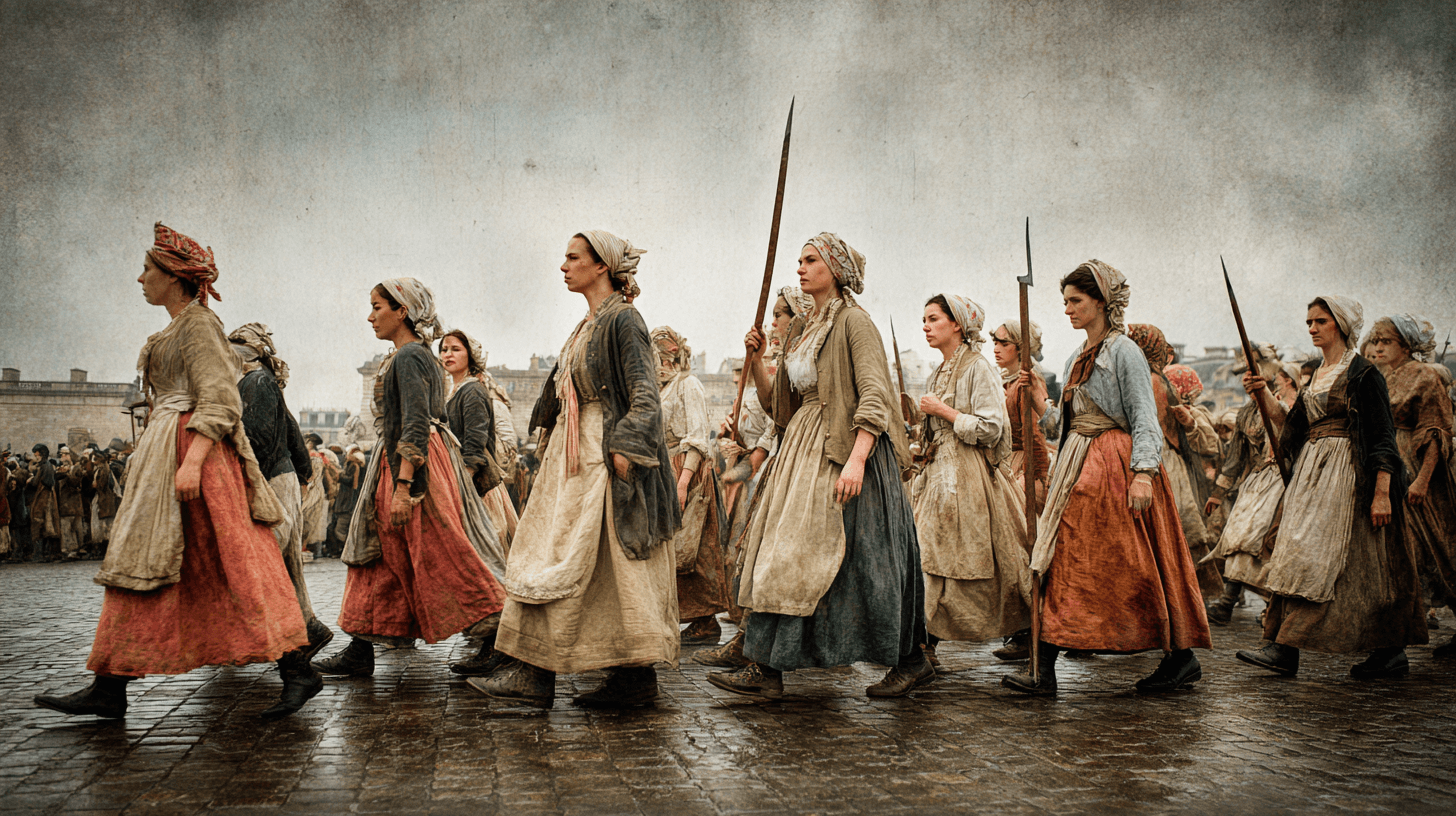
Six thousand of them. Market women, fish sellers, laundresses. They left the eastern markets at dawn and walked twelve miles in the rain. Kitchen knives, pikes, a few muskets. One cannon, dragged through the mud.
The National Guard tried to stop them. The Guard joined them instead.
They called the king "the Baker." They were going to Versailles to ask the Baker for bread.
The Palace
They arrived soaked and furious. Broke into the Assembly. Broke into the palace grounds. Got inside, looking for the queen. Two guards died.
By morning, the king agreed to everything. He rode back to Paris in his carriage, surrounded by the women who'd come to fetch him. The crowd carried loaves on pikes. Someone shouted: "We're bringing back the Baker, the Baker's wife, and the Baker's boy."
What It Started
The Bastille had fallen three months earlier. But the Bastille was symbolic — a prison with seven inmates. This was different. Bodies demanding bread. Women who couldn't feed their children taking the matter to the source.
The king fixed the bread price. Temporarily.
Within four years he was dead, guillotined in the city the women had dragged him to.
The Price After
Bread prices fluctuated. They always do. The revolution ate its own. But for one day in October, six thousand women walked twelve miles and brought back a king.
The Facts
- The 1981 Morocco bread riots killed over 600 people
- IMF-imposed austerity measures triggered the price increases
- Morocco continues to subsidize bread, flour, and cooking oil
- Similar "bread riots" have occurred throughout history worldwide
- The French Revolution was sparked partly by bread prices
- The Arab Spring began with protests over food prices
- Wheat subsidies cost the Moroccan government billions annually
- Bread is called "khobz" in Arabic — the word also means "livelihood"
Sources
- 1981 Morocco riots historical archives
- World Bank food subsidy reports
- "Bread, Freedom, Social Justice" — Middle East food security research